Understanding the Difference: Fine Glass Cloth vs Woven Roving
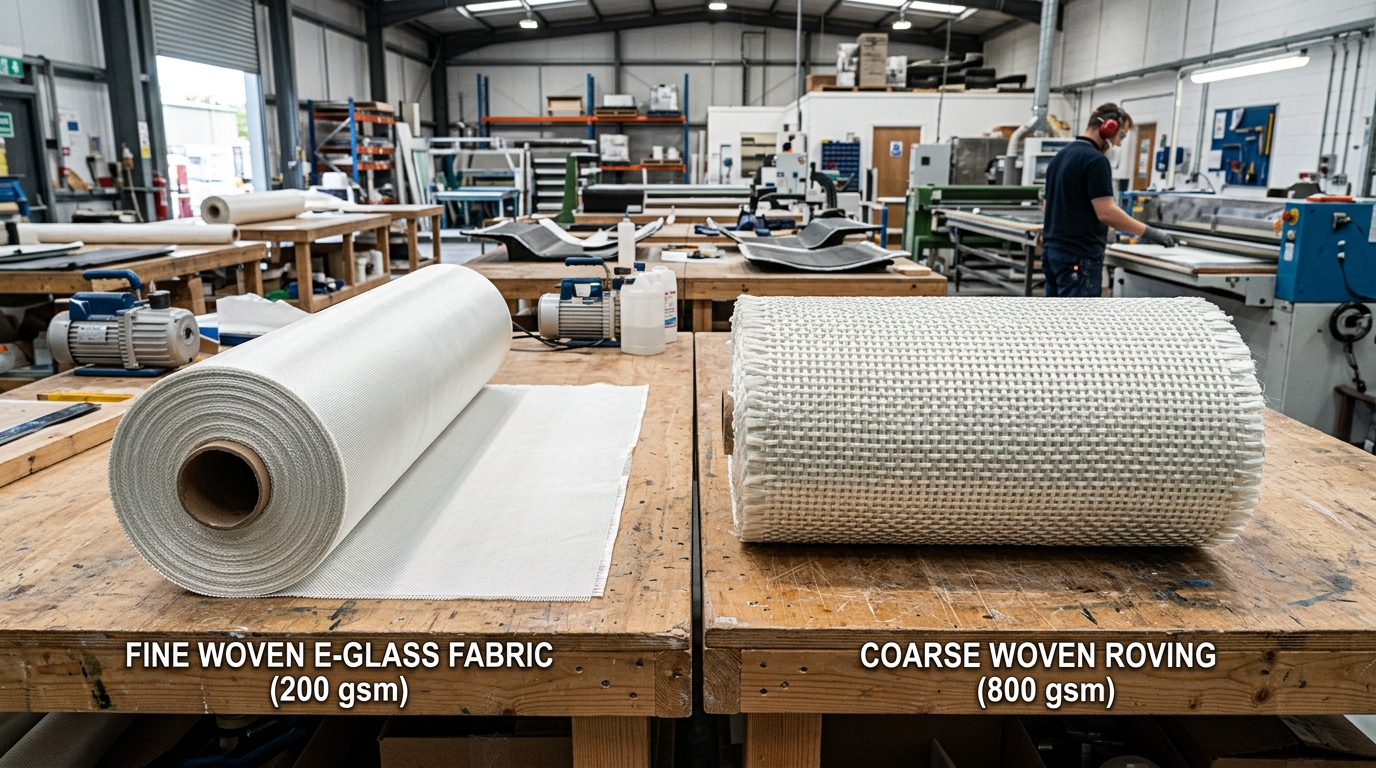
Both materials are woven from high-strength electrical-grade (E-Glass) filaments, but they differ drastically in filament grouping and aerial weight:
- Fine Woven Glass Fabric: Produced using lightly twisted fine yarns. Standard weights range from 45 g/m² to 200 g/m². The resulting fabric is smooth, tight, and thin (0.05 to 0.20 mm per cured ply).
- Woven Roving (WR): Manufactured from heavy, untwisted continuous filament rovings woven into a coarse grid. Standard weights range from 400 g/m² to 800 g/m². Woven roving is thick, heavy, and engineered for rapid laminate thickness accumulation.
Resin Infusion Kinetics & Surface Print-Through Prevention
In vacuum resin infusion (VIP) and high-quality mold construction, laminating engineers follow a proven layering strategy:
- The Print-Through Problem: Because woven roving has thick, coarse tows, placing woven roving directly against the gelcoat or mold face causes resin shrinkage marks ("print-through"), creating an uneven, corrugated exterior finish.
- The Skin Ply Solution: Best practice is to apply 1 to 2 plies of fine woven glass fabric (or surface veil) against the gelcoat. This creates a dense, resin-rich barrier layer that completely prevents the coarse roving pattern from telegraphing to the finished surface.
- Infusion Permeability: Coarse woven roving features open inter-tow channels that act as natural resin distribution pathways under vacuum, significantly reducing infusion fill times in large hulls, wind turbine roots, and storage tanks.
Galvanic Isolation: Combining Glass and Carbon Fiber
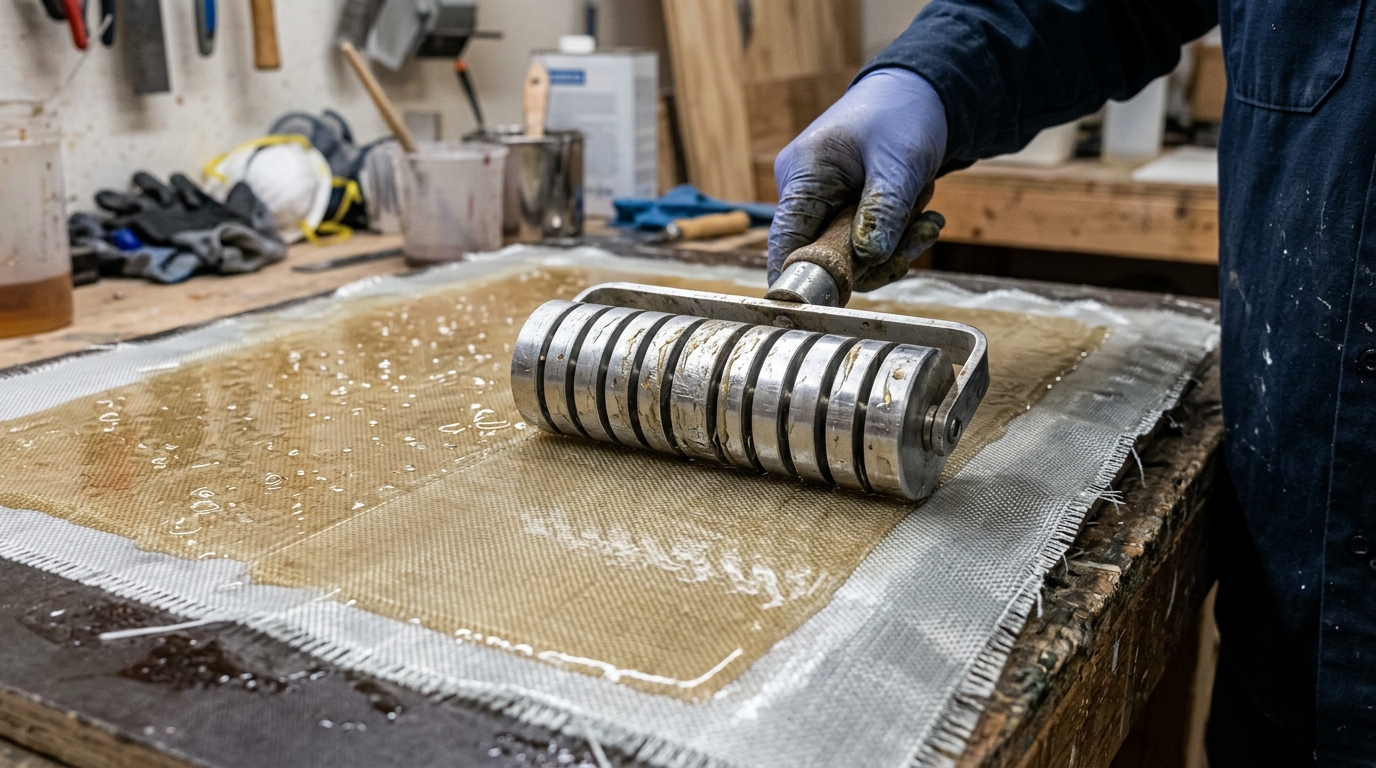
An essential engineering application of fine glass fabric is galvanic corrosion isolation in carbon fiber assemblies. Carbon fiber is electrically conductive and has a high galvanic potential. When in direct contact with aluminum or steel fasteners, it accelerates metal corrosion.
By placing a single insulating ply of fine woven glass fabric between the carbon laminate and metal mounting hardware, engineers create an electrically non-conductive barrier, eliminating galvanic corrosion entirely.
Composite Materials
Need Certified Composite Materials or Custom Parts?
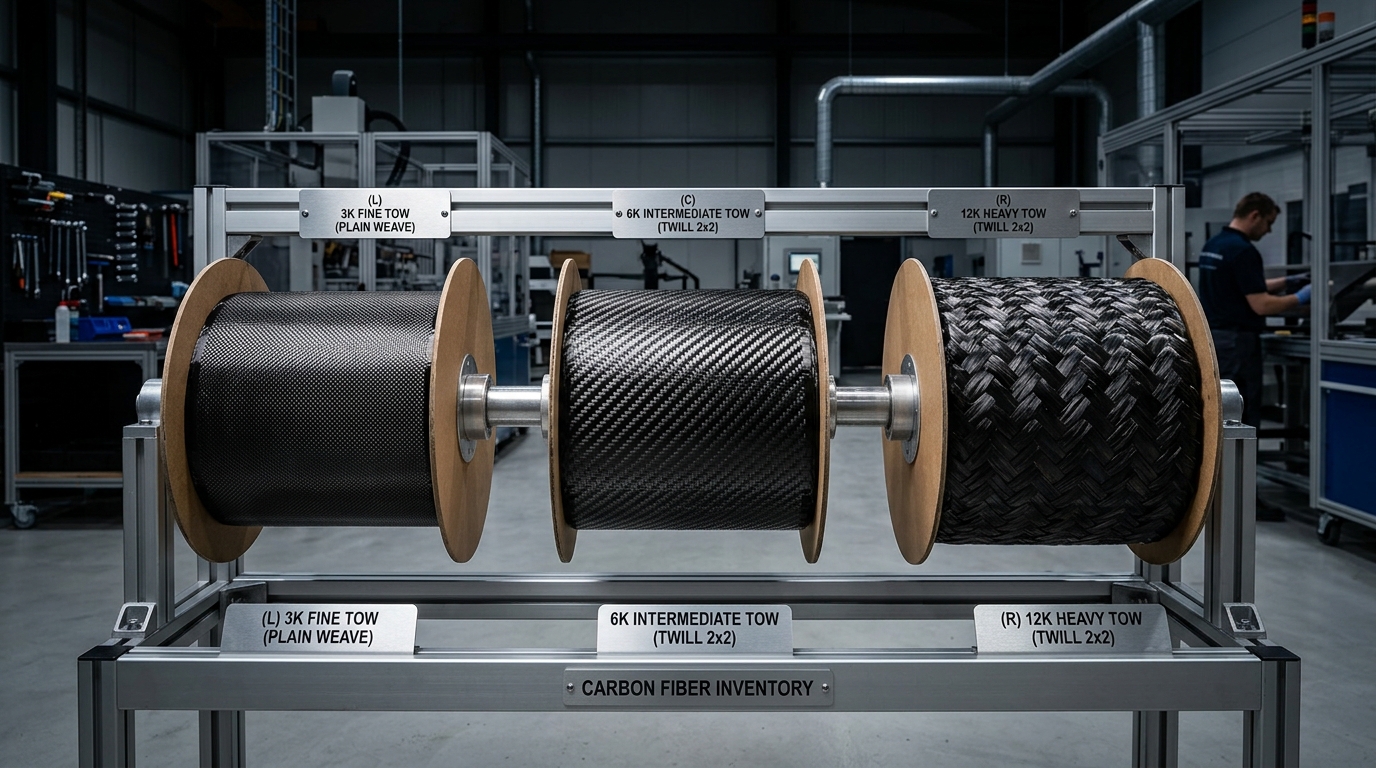
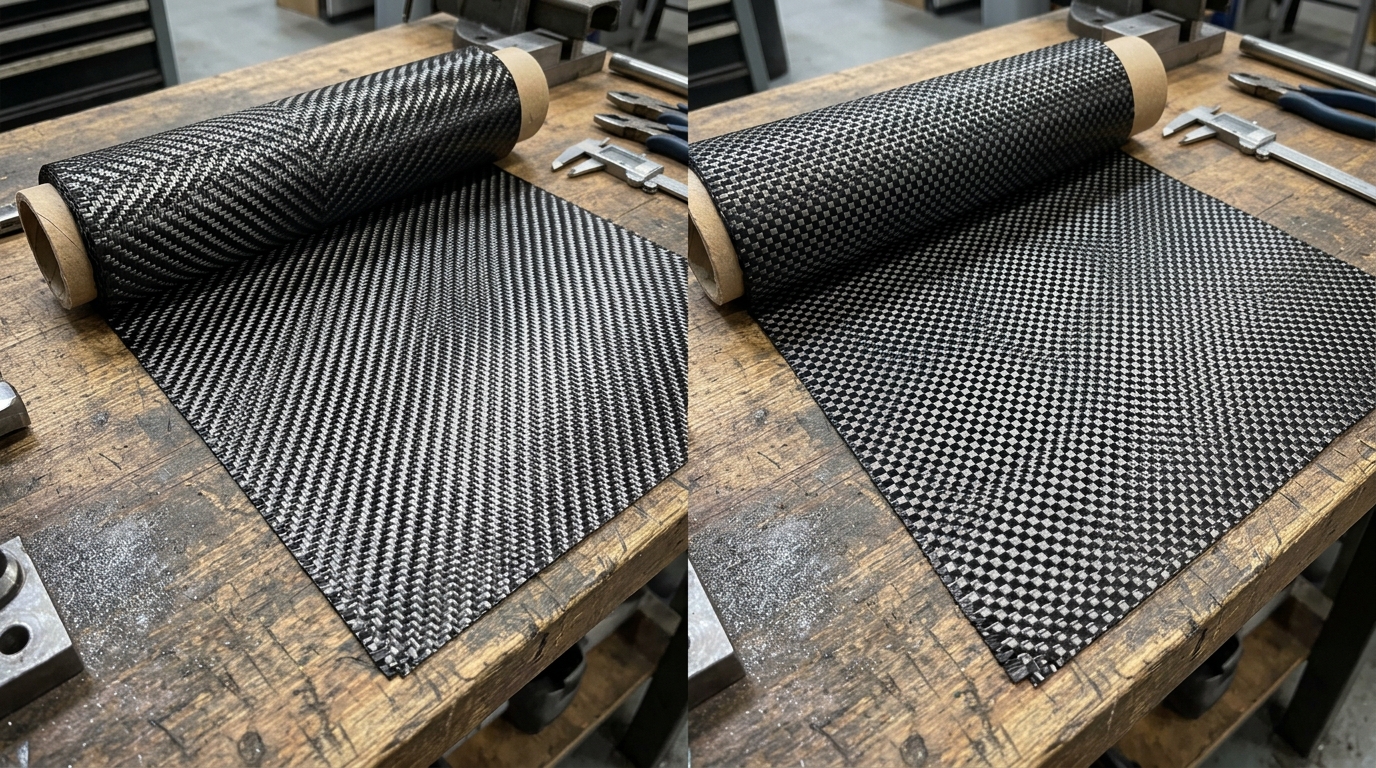
Shaanxi Fortex Technology supplies 3K/6K/12K carbon fiber fabrics, woven glass reinforcements, and matched epoxy systems with certified batch COA and roll traceability.