Weave Architecture: Over-One vs Over-Two
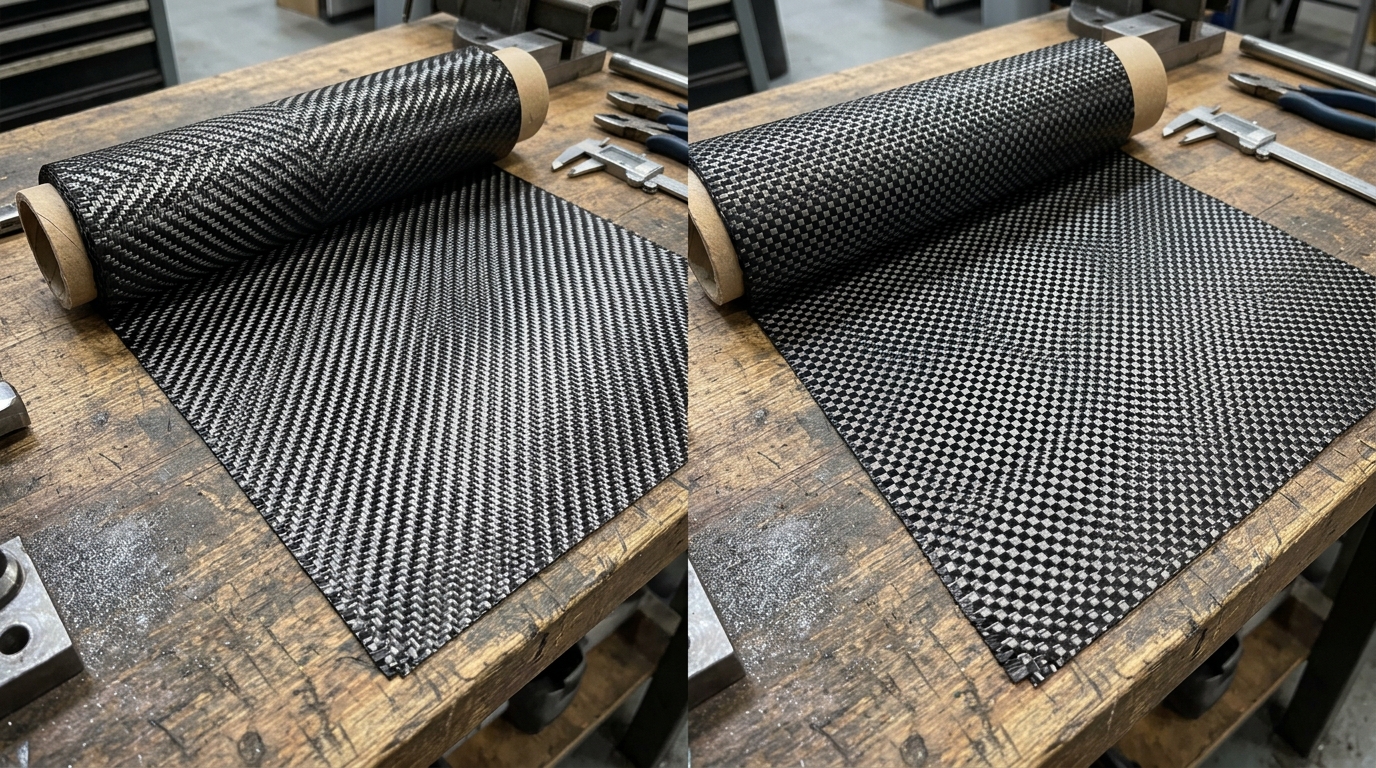
The difference between plain and twill weaves originates in the interlacing sequence of warp (lengthwise) and weft (transverse) carbon tows:
- Plain Weave (1×1): In a plain weave, each warp tow passes alternately over one weft tow and under the next. This creates a symmetrical checkerboard pattern with frequent interlacing points.
- 2×2 Twill Weave: In a 2×2 twill weave, each warp tow passes over two weft tows, then under two weft tows. The interlacing pattern shifts by one tow on each successive row, creating the iconic diagonal rib pattern recognized globally as "carbon fiber".
Yarn Crimp Angle & In-Plane Mechanical Performance
From a structural mechanics standpoint, carbon fiber is strongest when it is perfectly straight. When tows bend over and under adjacent tows, this bend is known as crimp.
Because plain weave interlaces twice as frequently as twill weave, plain weave tows exhibit a steeper crimp angle. Under high tensile loads, the crimped fibers attempt to straighten out, generating localized shear stresses within the resin matrix. Consequently, 2×2 twill typically achieves slightly higher in-plane tensile strength and modulus retention compared to plain weave of identical fiber type and areal weight.
Drapeability vs Fabric Stability
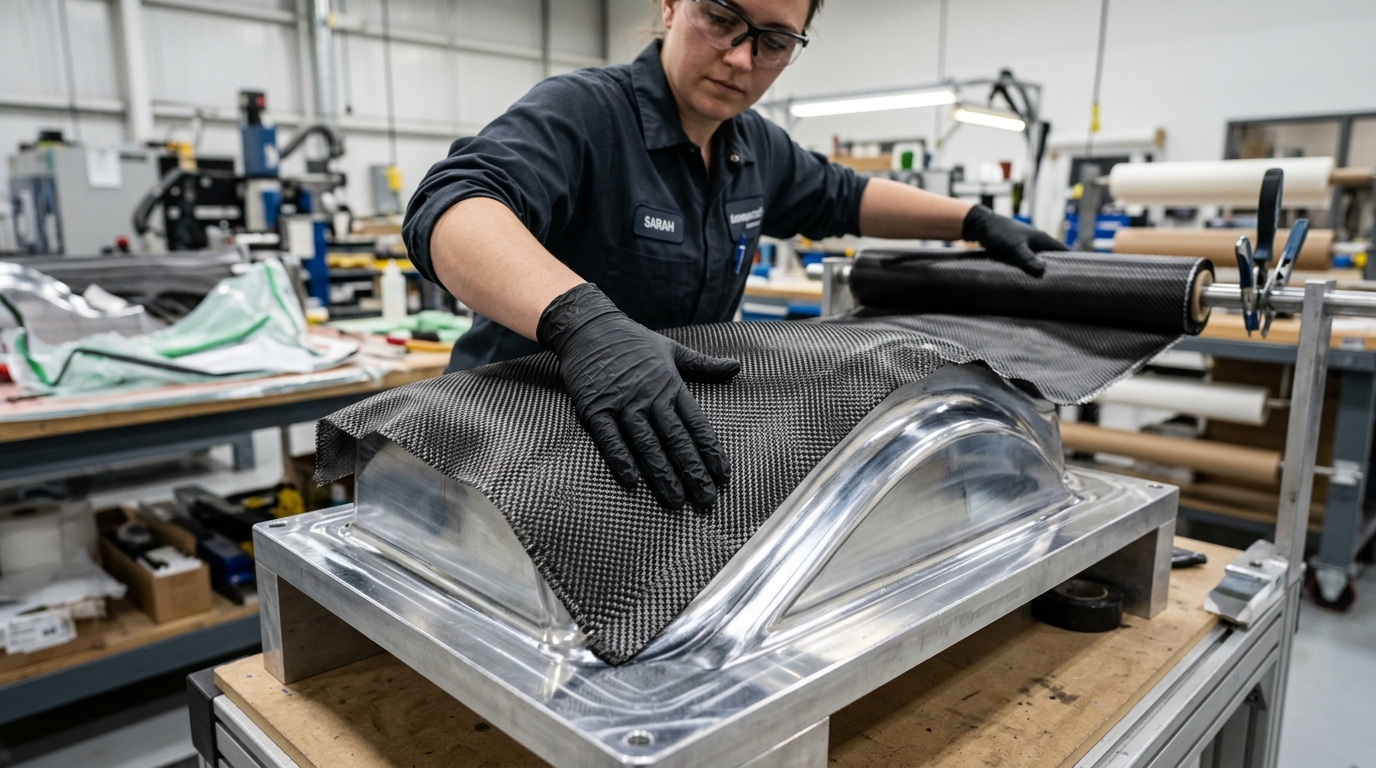
Composite manufacturing involves a direct tradeoff between fabric moldability and handling stability:
| Feature | Plain Weave (1×1) | 2×2 Twill Weave |
|---|---|---|
| 3D Compound Drape | Moderate (may wrinkle on tight domes) | Exceptional (shears smoothly around complex molds) |
| Fabric Handling Stability | High (holds weave geometry during cutting) | Moderate (tows can distort if mishandled) |
| Edge Fraying Tendency | Low (stable cutting edges) | Moderate (requires careful handling) |
| Aesthetics / Visual Appeal | Clean, technical grid | High-end diagonal weave (classic automotive) |
Composite Materials
Need Certified Composite Materials or Custom Parts?
Shaanxi Fortex Technology supplies 3K/6K/12K carbon fiber fabrics, woven glass reinforcements, and matched epoxy systems with certified batch COA and roll traceability.